“My mom always said I was an Autumn.”
I hear some version of this almost every week. A woman walks into a color session, or sends me a message, armed with whatever season she was assigned years ago by a friend, a quiz, or a vague memory of a book her mom had in the eighties. Sometimes she’s right. A lot of the time, she’s been dressing for the wrong season for decades.
Color analysis has been around for nearly a century, but most women still feel confused by it. And honestly? I understand why. Between the quizzes that contradict each other, the stylists who give different answers, and the twelve-to-sixteen season systems that make it feel like a personality test gone wrong, it’s a lot.
So today I want to strip it all the way back.
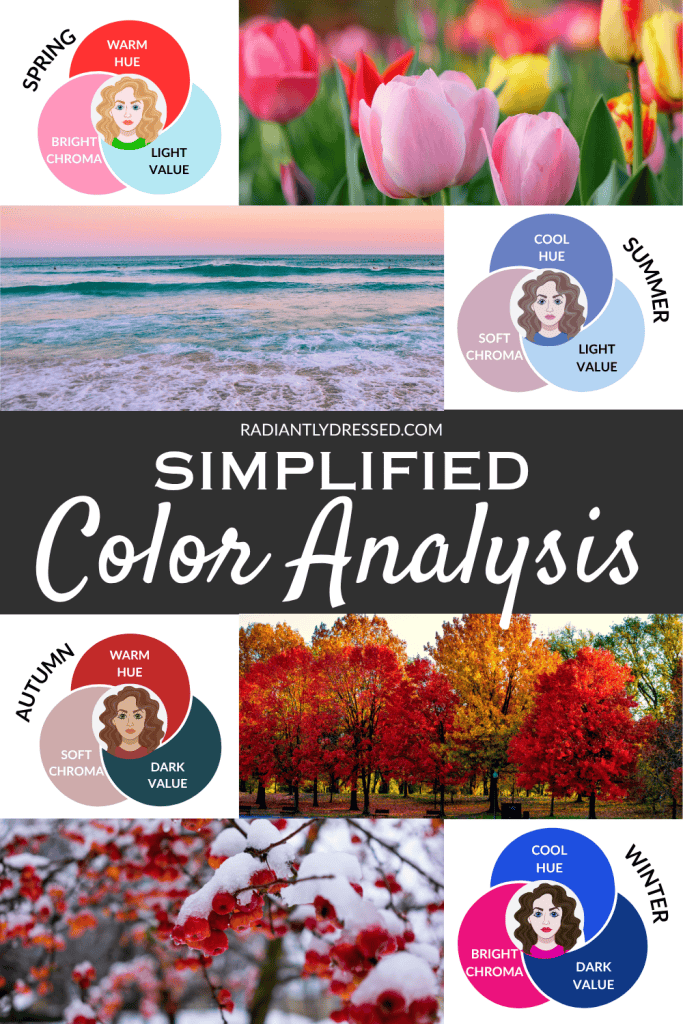
Before we get into the nuance of your specific season, there’s a foundation you need to understand first: the Big Four Seasons. Spring, Summer, Autumn, Winter. Everything else, every expanded system, every 12-season framework, my own ColorEssence System, builds on this. Get this right, and everything else starts to click.
Why Color Even Matters
Here’s the thing most people don’t realize: wearing colors that work with your natural coloring, your skin, eyes, and hair, can improve how you look by at least 50%, even if you change absolutely nothing else about your style.
Not your haircut. Not your weight. Not your makeup.
Just the colors you wear.
The wrong colors drain your face. They make you look tired, washed out, or harsh, depending on the mismatch. The right colors do the opposite. They make your eyes pop, your skin glow, and your whole face look more awake and alive. Women always ask me why they look so different in certain photos. Nine times out of ten, it’s the color they’re wearing.
It’s not about trends. It’s not about what colors you love (though we’ll get there). It’s about what your body’s natural coloring is already doing, and learning to work with it instead of against it.
The Three Things Color Analysis Actually Measures
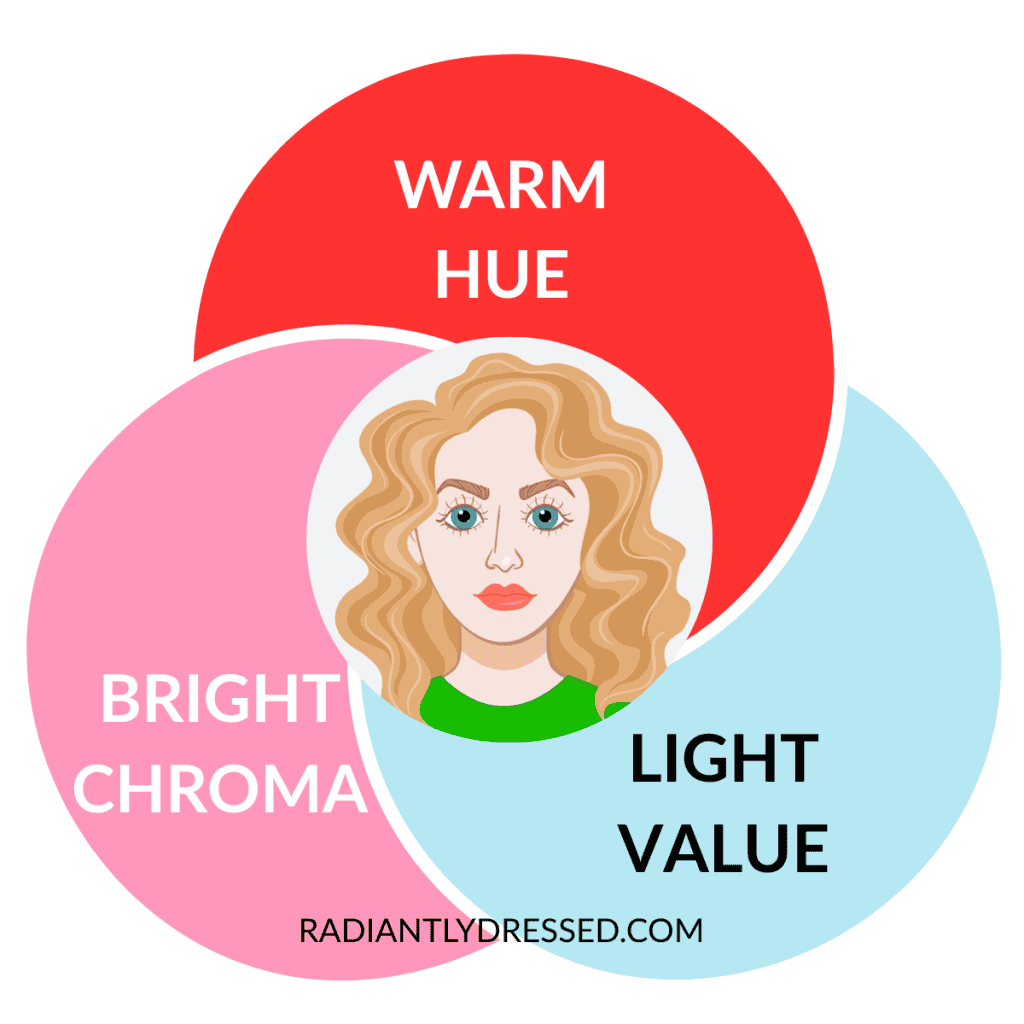
Every season is defined by three qualities or attributes. Once you understand these, you can start to see yourself differently in the mirror.
Hue is your undertone, the foundational warmth or coolness beneath your skin. This is the single biggest factor in determining your season. Your undertone is either warm (red-based) or cool (blue-based). The classic way to spot it: look at how your cheeks flush. Coral or peachy? You’re likely warm. Rosy or pinkish-purple? You’re likely cool. Warm types are Spring and Autumn. Cool types are Summer and Winter.
Value is depth, meaning how light or dark your overall coloring is. Light hair, fair skin, and lighter eyes tend toward Spring or Summer. Deep hair, rich skin, and darker eyes tend toward Autumn or Winter. This is where most people have a good instinct, because it’s the most visible quality.
Chroma is clarity, meaning whether your coloring reads as bright and saturated or soft and muted. This is the one that trips people up the most, and also the one that explains why you might look incredible in ivory but washed out in bright white, even if you’re “fair.” Eyes are actually the fastest way to read this: bright, vivid eye color usually means high chroma; soft, complex, or grayed eye tones usually mean low chroma. High chroma types are Spring and Winter. Low chroma types are Summer and Autumn.
Put those three together and you get four seasons.

Ready for the Complete System?
The Youniform™ Framework was designed to eliminate wardrobe overwhelm for good. In Youniform, I guide you step-by-step through building a repeatable system that makes getting dressed effortless so you can stop shopping, stop second-guessing, and start living.
The Big Four Color Seasons, Simply Explained
Spring: Warm, Light, Bright
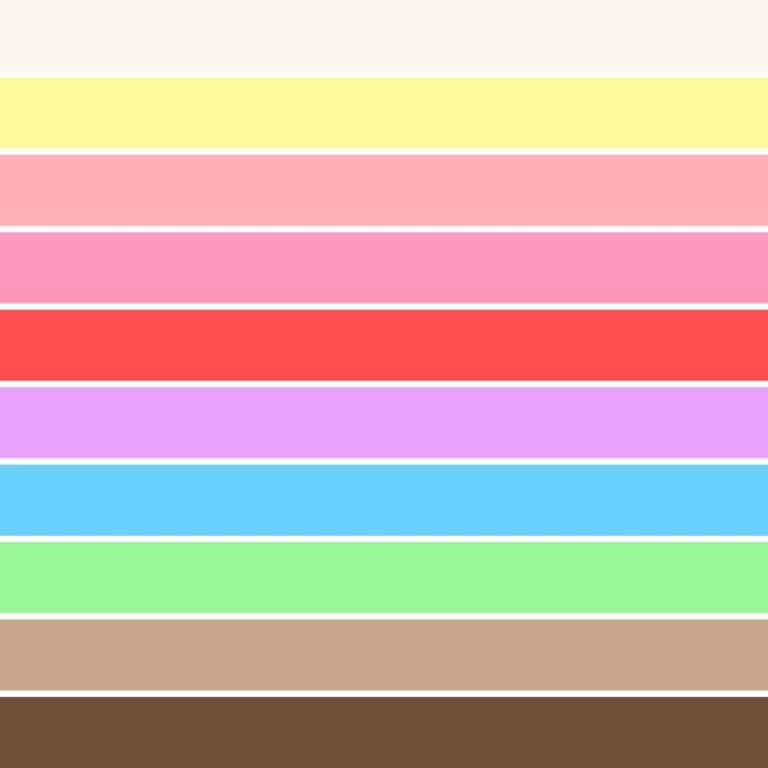
Spring types have warm undertones, lighter overall coloring, and a fresh, clear quality to their look. Think golden skin tones, strawberry blonde or light auburn hair, and eyes that can be anything from light brown to bright blue-green. The colors that sing on a Spring are warm, clear, and alive: coral, peach, warm yellow, true red, turquoise. Not dusty, not icy, not dark. Spring is the season of new things, and that translates directly into palette.
Where Spring goes wrong: reaching for muted or cool tones because they seem “sophisticated.” Dusty mauve on a Spring reads mousy. The same woman in warm coral is unforgettable.
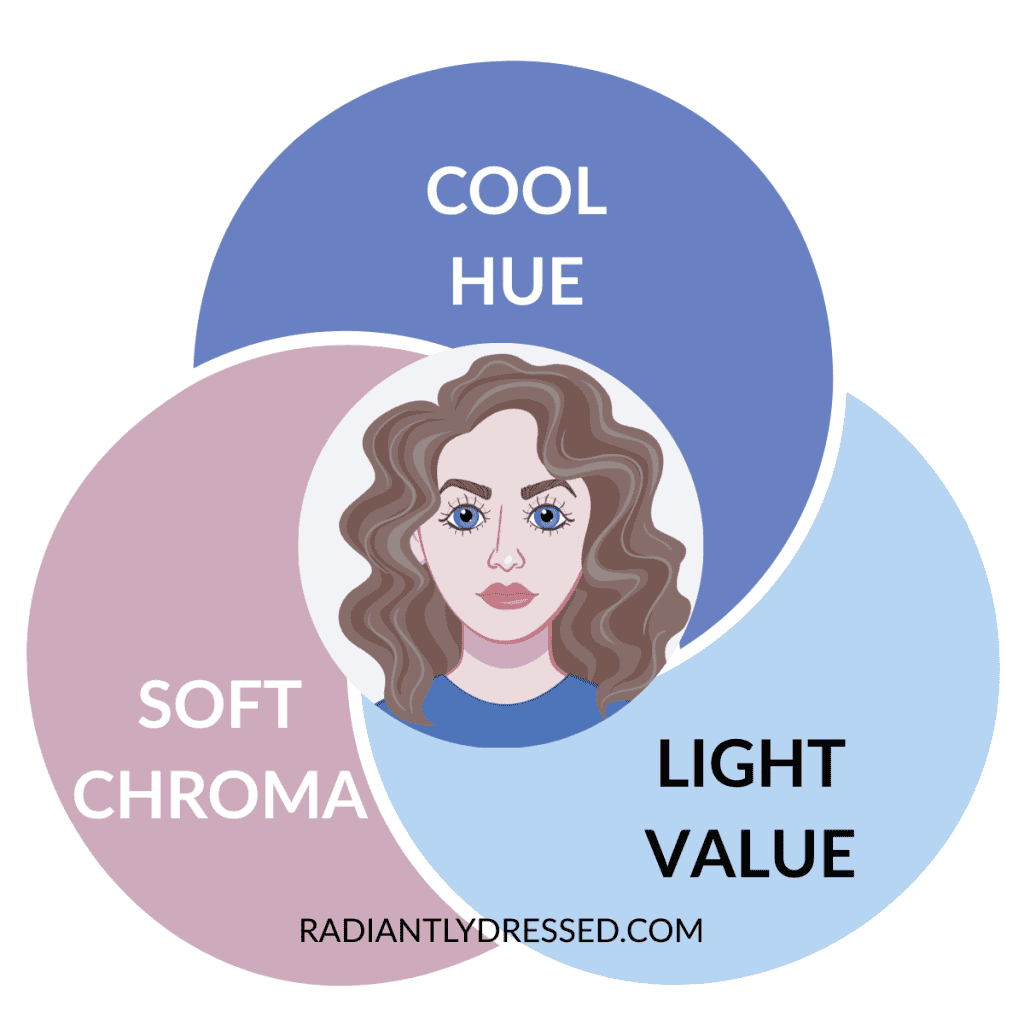
Summer: Cool, Light, Soft
Summer types are cool-toned, lighter in value, and soft in chroma. Where Spring is bright, Summer is blended. Think pink or beige-toned skin, ashy blonde or ash brunette hair, and eyes that often have a soft, complex quality: gray-blue, cool hazel, dusty blue. The palette that works is cool and muted: soft rose, lavender, slate blue, dusty mauve, cool berry. Not bright, not warm, not dark.
Where Summer goes wrong: wearing black or bright white, which is almost always too harsh. The same woman in soft charcoal or soft white looks polished and put together.
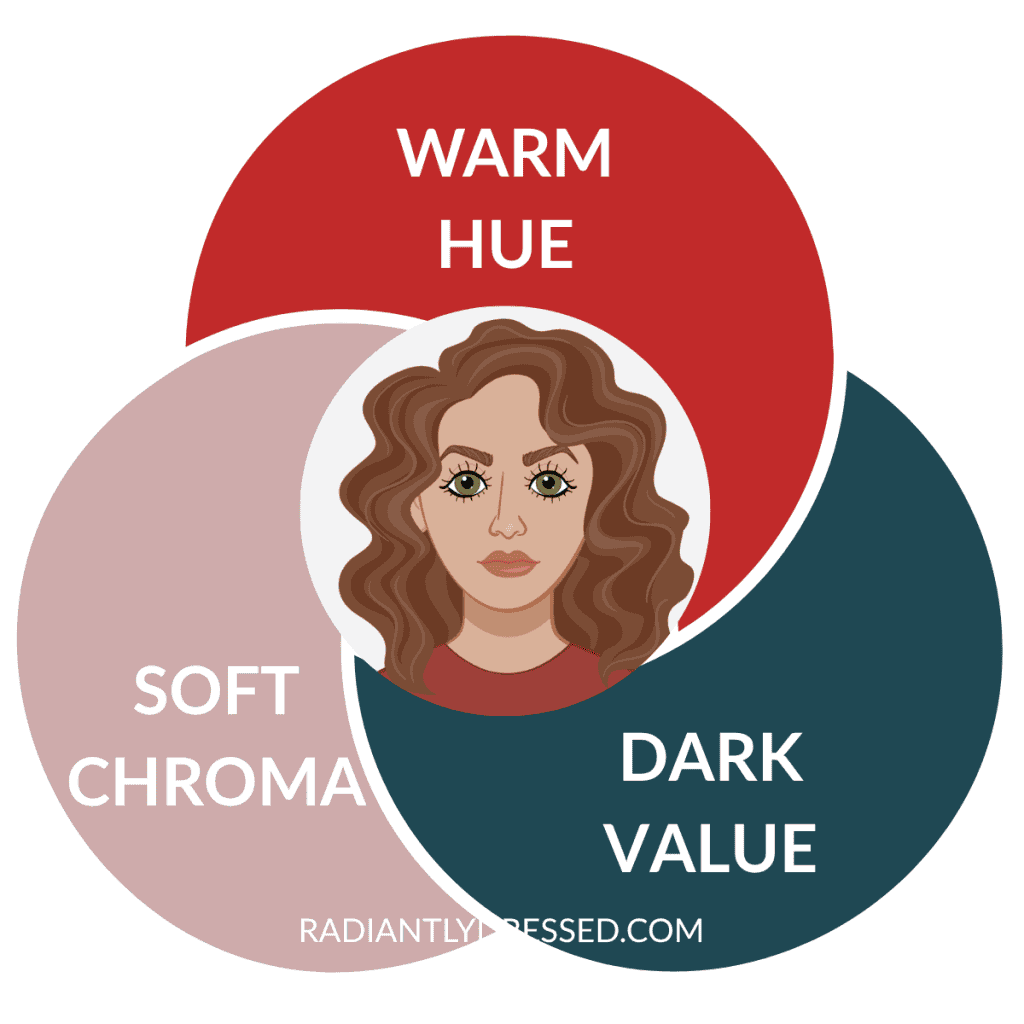
Autumn: Warm, Deep, Soft (or Rich)
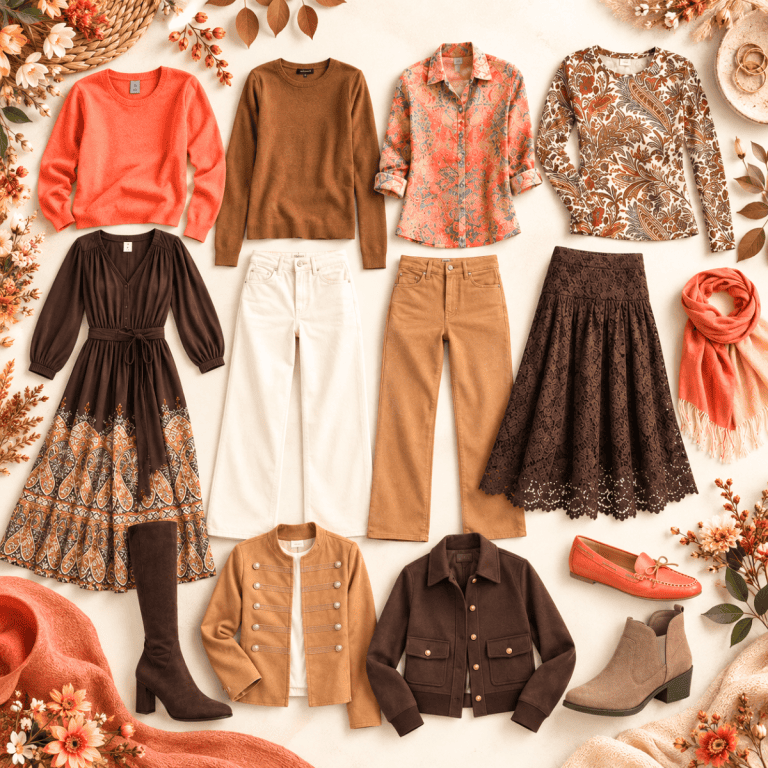
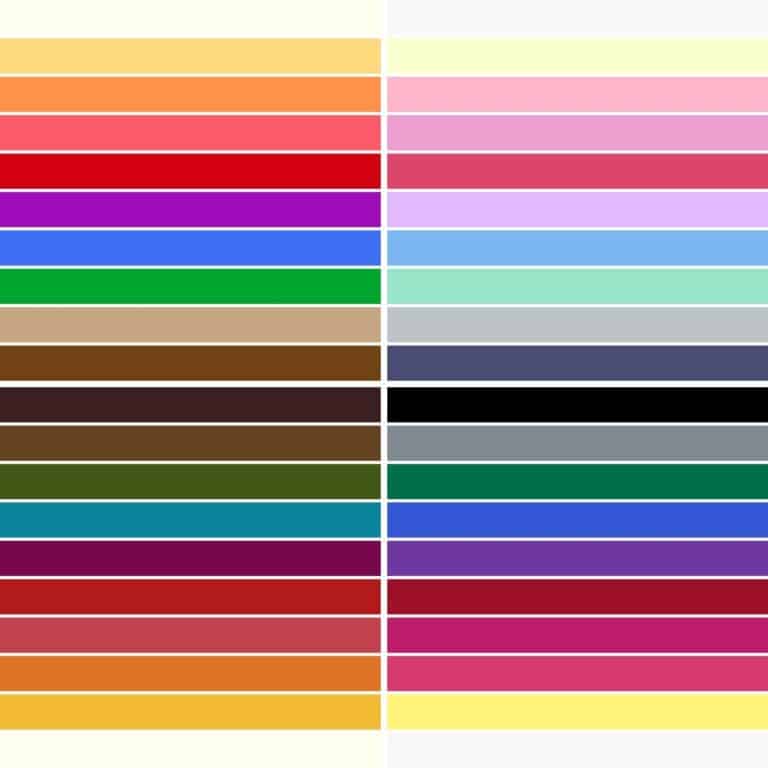
Autumn types are warm-toned like Spring, but deeper and more muted. Think golden or olive skin, rich brunette, auburn, or deep red hair, and eyes with warmth: amber, hazel, warm brown, sometimes olive green. The palette is earthy and rich: rust, camel, olive, deep terracotta, warm chocolate, moss. Not icy, not bright, not cool.
Where Autumn goes wrong: wearing black (too stark) or pastels (too washed). The same woman in a rich camel coat or deep olive top looks expensive and grounded.
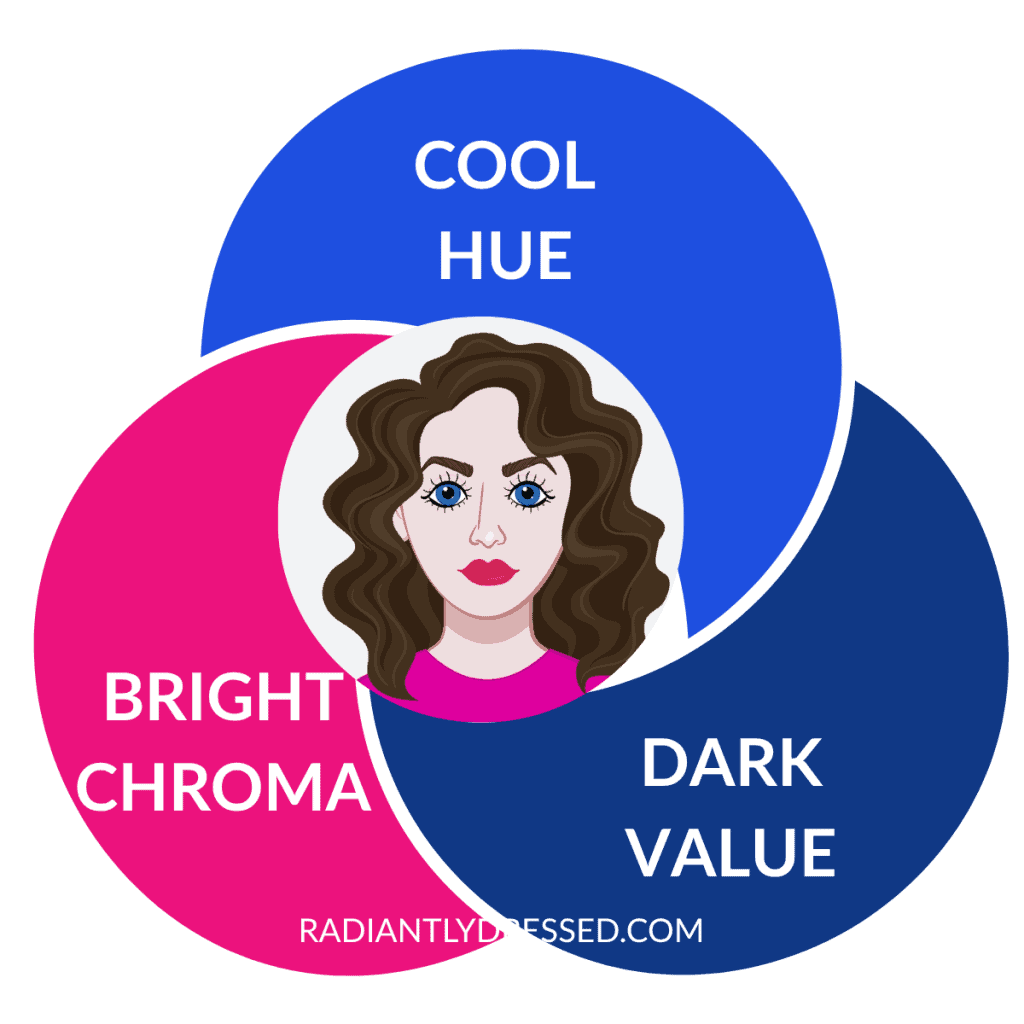
Winter: Cool, Deep, Bright (or Clear)
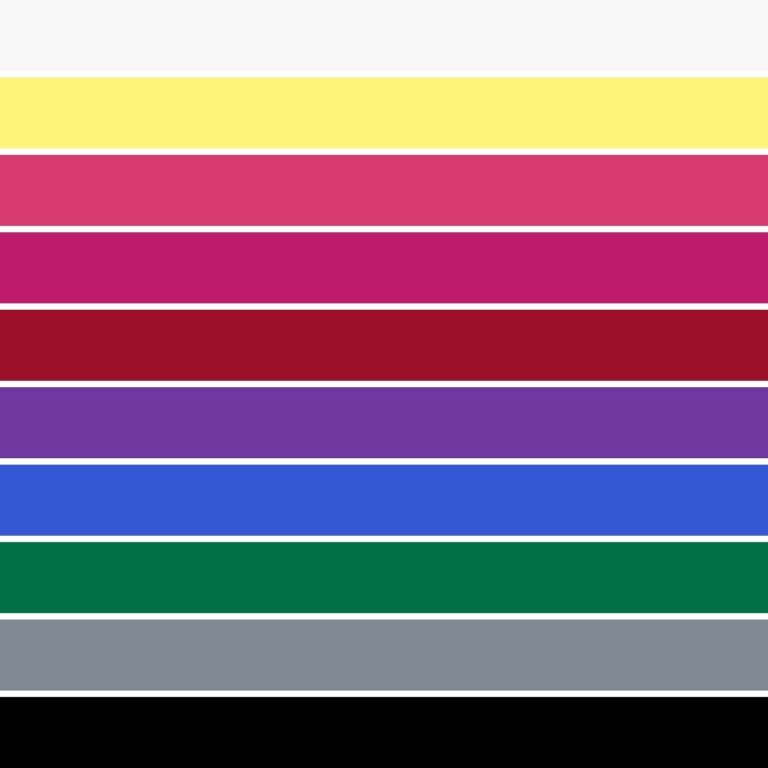
Winter types are the coolest and most contrasted of all four seasons. Think cool or neutral skin (which can range from very fair to very deep), dark hair, and eyes that read as distinct and clear: deep brown, cool hazel, icy blue, dark green. The palette is cool, clear, and high-contrast: true black, crisp white, icy pink, bright red, cool emerald, royal blue. Winter can handle extremes that would overwhelm every other season.
Where Winter goes wrong: going soft or warm. Beige washes a Winter out completely. So does muted or dusty anything. Black and white is not a Winter cliché. It’s a Winter strength.
“But I Don’t Fit Neatly Into One Box”
If you read all four and felt something like well, I have warm undertones but I’m pretty deep and muted, good. That awareness is the beginning of real color understanding, not a problem to solve.
Most women do have a clear dominant season, but the nuance within that season is where things get interesting. That’s why expanded systems exist, including the ColorEssence System I’ve developed, which layers your style essence on top of your color season to give you a complete picture of not just what colors flatter you, but how to express them in a way that feels authentically like you.
Because here’s what basic color analysis alone can’t tell you: two women can be the same season and still have completely different wardrobes. Color is the foundation. Your essence is the architecture.
How to Find Your Color Season
You don’t need a professional color analysis to start making better color choices, though it helps enormously to have trained eyes on you. Here’s what you can do right now:
Start with undertone. Compare pink (cool) versus orange (warm) drapes to see which one is more flattering.
Take a look at your favorite clothing, are the colors lighter in value or darker? This is a strong clue as to whether you are light or deep or somewhere in the middle.
Then look at your eyes, not just the color, but the quality. Are they vivid and distinct? Or soft and complex? Bright eyes often mean clear colors will work for you. Soft eyes often mean muted colors will.
Then try things on with intention. Next time you get dressed, hold something up in natural light and look at your face, not the garment. Does your skin look more alive? Do your eyes pop? Or do you look tired before the day has started?
That contrast, the way your face responds to color, is your best guide.
Ready to Know Your Exact Season?
The Big Four is the beginning. But if you’re ready to go deeper, to know your specific season and your essence type, and to get a complete picture of the colors and style profile that were made for you, that’s exactly what our ColorEssence Comprehensive Style Report does.
It’s not a quiz. It’s a personalized analysis that gives you your season, your essence blend, your palette, and starter Youniforms built around your specific type. Women who get it describe it as finally having a roadmap instead of a closet full of guesses.
Learn more and get your ColorEssence Report →
Next in this series: We’re going inside each of the Big Four seasons, starting with Spring. What it really means, how to actually customize it for your closet and style, and the first thing you can do to get clarity on your best colors.